Start with the ingredients, not the photograph
Choose apples sold as food. Read the full product name and ingredients: the pack may contain only apple, or also sugar, spices and other additions. A single-ingredient product is a straightforward starting point if you want to get to know the fruit itself. Treat cinnamon-coated apple as a combination rather than a test of apple alone.
Do not assume that “chips” means added sugar or frying. Thin apple slices can be dried until crisp, so the snack name does not establish the production method. Check the packaging. Fruit leather made from purée is a different format again and is not a direct replacement for slices in a recipe.
Slices, pieces and crumbs in practice
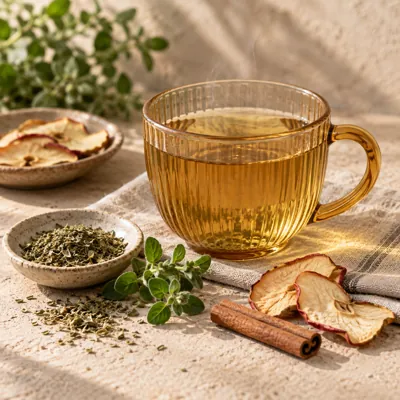
Slices are easy to see and remove, but their diameter and thickness vary. Two large rings may make a different serving from two small pieces. When recording a drink you want to repeat, note the weight of the dried fruit if you have a suitable scale, instead of relying only on a slice count.
Small pieces fit neatly into a basket infuser. Check the mesh, though: crumbs can pass through a coarse strainer. Look at the contents of the packet before filling and choose a filter that catches the smallest pieces. Cut up only the measured serving when the recipe calls for it; there is no need to crush the whole supply.
Follow a recipe for the complete blend
Do not choose the water temperature or steeping time from the apple alone when herbs or other ingredients are also present. Use the instructions for the specific blend or your chosen culinary recipe. Measure the water and dried ingredients before pouring, set a timer and strain the drink when steeping is complete.
Avoid cramming fruit into a tiny tea ball merely because it fits while dry. Choose a basket that allows the ingredients to be covered freely with water. If you replace slices with pieces, keep a record of the original serving. This substitution gives you something to compare; it does not guarantee an identical drink.
Compare two products while keeping the method steady
Use two similar mugs and the same recipe, changing only the apple product. Record its name, ingredients and shape. Where possible, compare equal weights of dried fruit with equal volumes of water. Counting pieces or loosely filling a teaspoon gives you a less clear reference when the products have different shapes.
Once the drinks have cooled to a comfortable temperature, describe aroma, perceived sweetness, tartness and loose particles. Taste before adding a sweetener if that suits you. Then decide whether to add honey, sugar or spices. A note such as “gentle apple aroma, few particles” tells you more for next time than simply “better”.
Keep the useful information for next time
If you transfer the fruit into a container, retain the label, date and storage instructions. Measure it with a clean, dry utensil and close the packaging afterwards. Do not judge the product only by a light or dark colour; preparation and treatments before drying can affect its appearance.
For home-dried apples, follow a tested food-preservation method rather than using this guide as drying instructions. Add the source of the apples, preparation method and piece size to your infusion notes. That gives the next trial a concrete reference, even if you later choose another variety or cut.
Frequently asked questions
Can apple chips be used in an infusion?
They can be a culinary ingredient when sold as food with a known ingredient list. Check additions and directions. The word “chips” alone does not establish that the flavour will match ordinary dried slices.
Are two slices always the same serving?
No. Size and thickness vary. For a repeatable comparison, record weight, product shape and water volume, while following the instructions of the recipe you use.
Educational and culinary content. It does not confirm the edibility of wild plants or guide medical treatment.