Separate brewing temperature from serving temperature
Read the blend’s instructions first. BfR recommends boiling water and at least five minutes of steeping for herbal and fruit infusions. Keep any longer time required on the packet. Do not shorten that stage because you plan to add ice later. Ice is for serving; it does not replace preparing the ingredients.
The words “serve cold” may describe a finished drink, whereas a product specifically made for cold water has its own manufacturer’s instructions. Do not transfer those instructions to ordinary dried herbs. This guide uses a hot-brewed infusion. A familiar blend whose flavour you already recognise without additions is an easy place to start.
Brew and strain before cooling
Set out a clean vessel approved by its manufacturer for boiling water, an infuser and a cooling container. Measure the water according to the recipe. Do not create an improvised concentrate by halving the water: that changes the brewing conditions, not just the eventual serving temperature. For several portions, keeping established proportions is easier to repeat.
When brewing is finished, remove the infuser or pour through a strainer. Remove any fruit and spices that were steeping loose as well. Only then divide the strained drink for cooling. Leaves left in the pot will otherwise keep affecting the flavour while you turn your attention to glasses or ice.
Cool promptly instead of waiting on the counter
USDA recommends prompt cooling in small, shallow containers and refrigeration at about 4°C/40°F or below. Do not wait for a large jug to reach room temperature by itself. Choose containers suitable for warm liquids and cooling; do not suddenly put hot glass into ice water unless its manufacturer permits that temperature change.
For this homemade drink, apply CDC’s general rule for perishable foods: refrigerate within two hours, or one hour above 32°C/90°F. This is a maximum time outside refrigeration, not a recommended waiting period. Note when you prepared it and cover the chilled infusion. Plan a small batch for the same day; do not judge its keeping time from colour or smell alone.
Ice adds water too
Make ice from drinking water in a clean tray. Add it to a glass when serving the chilled infusion, rather than to the whole refrigerated batch. This makes it easier to assess how quickly one portion becomes diluted. Leave space for the cubes instead of filling the glass to the rim before dropping them in.
As a simple calculation, 200 ml of infusion plus 50 g of ice becomes approximately 250 ml of liquid once the ice has fully melted. The amount of brewed ingredients has not increased. If the flavour becomes too light, first try the chilled drink without ice or with fewer cubes. Do not automatically extend steeping to compensate for unmeasured additions.
Add garnishes and assess the flavour last
Serve small portions and keep the rest refrigerated. Wash and prepare fruit garnishes separately, adding them to the glass just before serving. Do not pour an unfinished glass back into the shared container. If you want to try sweetening, do it in one glass so you can compare it with an unsweetened portion.
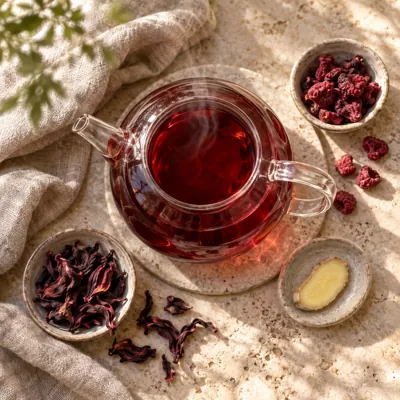
The photograph shows the hot infusion from the public “Food-grade hibiscus · Raspberry” recipe, with ginger. It illustrates the base before chilling, not a finished iced drink. In your tasting notes, record the water, brewing time, cooling method and amount of ice. Next time, change just one element while retaining the required brewing and chilling practices.
Frequently asked questions
Are a chilled infusion and cold brew the same method?
No. Here the infusion is brewed hot and then chilled. Steeping ingredients in cold water is a different method that requires a suitable product and its instructions.
Why does the infusion taste weaker with ice?
Melting cubes increase the amount of water. Compare a chilled portion without ice with one containing a measured amount before changing the recipe.
Educational and culinary content. It does not confirm the edibility of wild plants or guide medical treatment.
BfR · Brewing herbal and fruit infusions
USDA · Cooling and refrigerator temperature