What goes into the cup?
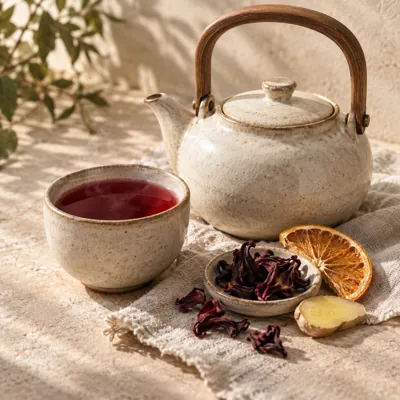
Hibiscus drinks commonly use Hibiscus sabdariffa. The fleshy calyces at the base of its flowers, rather than decorative petals alone, are the material described for drinks by the University of Florida.
A packet may say “hibiscus flowers” or “hibiscus calyces”. Treat the first as a trade description that may need clarification. If the label does not identify the plant or intended use, ask the seller before buying. Whether the dried pieces are small or nearly whole does not establish their identity.
A food ingredient or an ornamental plant?
The common name “hibiscus” can refer to different plants; Kew's names database shows that it does not identify a single species. A flower from a pot, florist or decorative arrangement does not become an infusion ingredient merely because it resembles a tea packet illustration.
For this comparison, choose a packaged food product with clear information. Read the ingredients, preparation directions and storage instructions. Keep the label if you transfer the contents to a jar. If you cannot establish what is in an unlabelled bag, postpone tasting until its origin has been clarified.
Plain hibiscus or a fruit blend?
A red drink does not tell you how much hibiscus a blend contains. Compare the ingredients of two products before buying: one may be plain hibiscus, the other a composition with fruit, spices or flavourings. Write down those differences rather than assuming both packets will taste alike.
Prepare each product according to its own instructions. Once comfortably cool enough to drink, taste it without additions first. In your note, separate sourness from fruity aroma and sweetness: “smells of berries” does not automatically mean “tastes sweet”. The note describes this particular cup, not every hibiscus product.
What to decide after the first tasting
To try an addition, leave some of the infusion plain and add just one chosen ingredient to another portion. Compare them at a similar temperature. Adding lemon, honey and spices together makes it harder to identify the change you liked most. There is no need to sweeten a drink if you enjoy it unsweetened.
Before your next purchase, record the product name, ingredients, label directions and one thing you would change. If the flavour does not suit you, choose another blend rather than shortening preparation below the instructions. Napar offers 150 complete recipes with ingredients and preparation steps.
Frequently asked questions
Can ornamental hibiscus petals replace the dried infusion ingredient?
Do not make that substitution on the basis of a name or appearance. For a home tasting, choose a clearly labelled food product with an identified ingredient and preparation instructions.
Will a deeply red infusion taste sweet?
Colour alone cannot tell you. Check the ingredients and taste the prepared drink before sweetening. Record appearance, aroma and flavour separately.
Educational and culinary content. It does not confirm the edibility of wild plants or guide medical treatment.