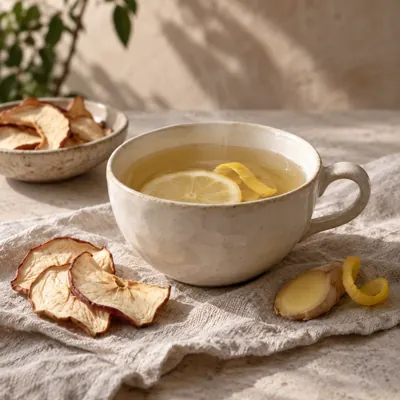
Lemon & dried apple
Familiar fruit in a warming cup.
View recipeAn evergreen tree with leathery leaves and yellow fruit. Lemon flesh adds acidity, while the outer peel brings intense fragrance. The white pith can be bitter; use fruit whose peel is suitable for consumption.
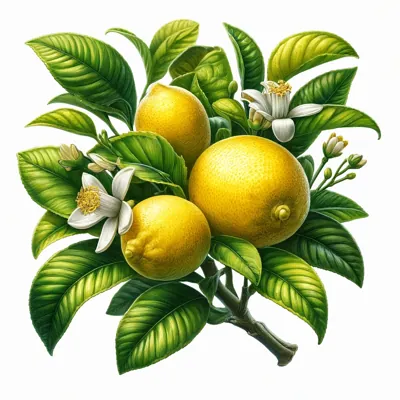
Culinary citrus flesh or peel; check that the peel is intended for consumption.
Wash fresh fruit and use only peel suitable for eating. Check dried products for added sugar and other ingredients. A thin coloured zest layer behaves differently from a whole slice with flesh and pith. Follow recipe amounts; longer contact may increase bitterness. Remove seeds and fruit pieces before drinking.
Apple · Ginger · Mint
These are flavour ideas for recipes, not therapeutic guidance. Start with one addition in a blend to preserve the character of the main ingredient. Dried fruit adds sweetness and a fuller aroma.
Keep the dried product in a labelled, airtight container away from moisture, light and heat. Store fresh ingredients according to their label. Check the date and smell; discard anything mouldy, damp or with an unusual odour. Do not mix a new batch with old leftovers.
Choose only food-grade ingredients of confirmed origin. The name, species and plant part matter. Neither an illustration nor photo identification confirms edibility. For allergies, pregnancy, breastfeeding or medication, consult a professional about herb selection.
All 150 recipes are free on the website, with ingredients, quantities and preparation steps.
Familiar fruit in a warming cup.
View recipe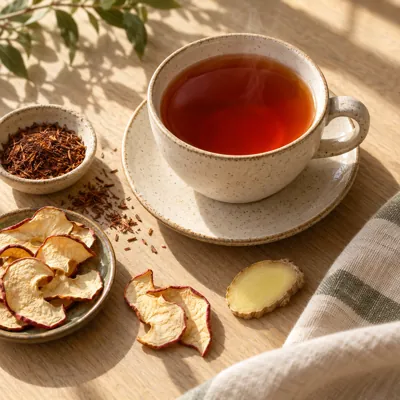
Red and green rooibos differ in processing. Learn what to check on the packet and how to compare two infusions without confusing the effect of added flavours.
Read the guide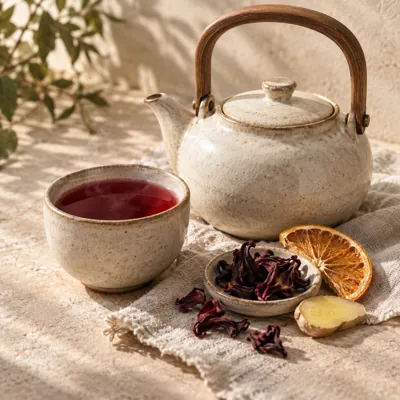
Buying hibiscus for a drink? Learn what calyces are, check that the product is intended as food, and compare plain hibiscus with flavoured blends.
Read the guideHow to add lemon to an infusion: choose juice or zest, prepare the fruit and compare a cup before changing the whole teapot.
Read the guideA plant atlas, an infusion library and your personal collection. Discover the app that brings them together.
Discover the Napar app