Identify the product before preparing it
Choose lemongrass sold as a food ingredient. Check whether you have fresh stalks, leaves intended for an infusion or a blend containing other ingredients. Do not substitute an ornamental grass or a fragrance product with a similar name. The labelled identity and intended use are more useful than comparing your purchase with an online photograph.
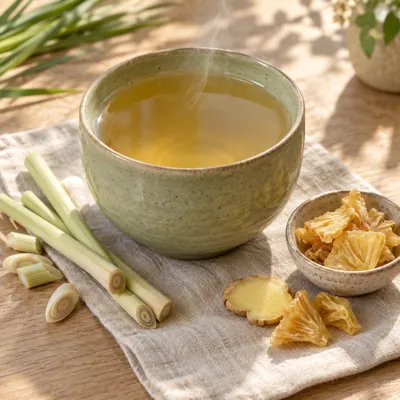
The RHS describes the lower stems as a culinary ingredient and the tougher upper leaves as suitable for an infusion. That does not mean every part needs the same preparation. Keep the directions for your particular product. The photograph in this article shows a drink inspired by lemongrass and pineapple; it does not provide quantities or the full recipe.
Prepare fresh stalks on a stable board
Wash your hands and set out a clean board and knife. Rinse the fresh ingredient under running water, remove dirt and strip away tough outer layers. Keep the stalk on the board while cutting rather than holding it in the air. Handle long leaves carefully: the RHS notes that their edges can be sharp.
The stalk is fibrous. University of Wisconsin guidance describes crushing it, heating it in liquid and removing it before serving. When following a drink recipe using a fresh stalk, prepare it as that recipe directs and retain pieces large enough to retrieve easily. Finely chopping the ingredient is not a necessary step for every infusion.
Match leaves and dried pieces to the filter
For long leaves, choose a vessel that accommodates them without leaving them hanging over the rim, or cut them with clean kitchen scissors as your preparation requires. Avoid packing the ingredient into an undersized infuser. For finely cut products, check the mesh before adding water: if dry pieces fall freely through it, they may also end up in your cup.
Set out a second clean vessel and a fine strainer if you intend to strain by pouring. Leave enough space to lift and pour the vessel safely without putting your hands in the steam. Follow the product directions or a reliable recipe for that form when choosing the amount, water temperature and time. Do not transfer a soup’s cooking time to a leaf infusion.
Strain and record what would improve the next cup
After preparation, separate the stalks or leaves from the drink. If fibrous pieces remain, pour it through a finer strainer into a clean vessel. Allow it to reach a comfortable drinking temperature. Keep two observations separate: whether you like the flavour, and whether straining was convenient. They suggest different adjustments for your next attempt.
Note the product form, vessel, filter and preparation method. If the drink tastes right but is awkward to strain, change the filter or piece size first instead of altering every ingredient at once. Try additions such as pineapple or lemon separately so you can judge their effect. Lemongrass’s citrus aroma does not itself mean that lemon has been added.
Frequently asked questions
Do I need to eat the lemongrass pieces in an infusion?
No. In this use the ingredient flavours the liquid, and firm stalks and leaves are separated before drinking. Tiny particles are not a reason to swallow larger fibrous pieces; use a finer strainer if necessary.
Can fresh stalks and dried leaves be exchanged spoon for spoon?
Do not assume that conversion. They differ in plant part, water content and cut size. Use directions appropriate to your ingredient. When changing products, record the new method instead of treating the result as a repeat of the same serving.
Educational and culinary content. It does not confirm the edibility of wild plants or guide medical treatment.
RHS: growing and harvesting lemongrass
University of Wisconsin–Madison Extension: culinary uses of lemongrass