1. One plant, two processing methods
The SA Rooibos Council specification describes both forms as dried leaves and stems of Aspalathus linearis. Red rooibos is oxidised; green rooibos does not undergo that stage. The distinction concerns processing, rather than two different plants.
You may see red rooibos described as fermented. Here, the term refers to oxidation. Research into rooibos colour formation links its characteristic reddish-brown appearance to oxidative changes. Do not automatically transfer your expectations of other fermented drinks to this product description.
2. Separate the base from added ingredients
Before comparing packets, check whether both contain plain rooibos. A blend with vanilla, fruit or spices answers a different question from a comparison of two plain products. If one is flavoured, record that next to its name instead of attributing the whole difference to the red or green base.
Do not identify the type solely from the photograph of a drink on the box. Look for an explicit description on the label or in the maker’s product information. If it is missing, do not infer it from the artwork. You can record “type not specified” and choose two clearly described products for the comparison itself.
3. Set up a comparison you can interpret
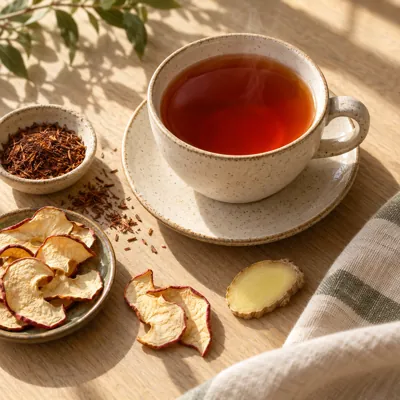
Use two clean, similar vessels and label them before pouring. Prepare each product according to its instructions, recording the dry ingredient quantity, water and time. If the directions differ, note that difference. You are then comparing two cups prepared as their makers recommend, rather than isolating the effect of processing in a laboratory experiment.
For the first tasting, leave out lemon, milk and sweeteners. Wait until both drinks are comfortable to taste. Look at them in the same light and smell each separately, without trying to guess the wording on the packet. Write two or three descriptions of your own for each. “I cannot name this aroma” is more useful than borrowing a note you did not notice.
4. Choose for the way you serve it
The SA Rooibos Council describes red rooibos as smooth and naturally sweet in profile, and green rooibos as fresher and slightly grassy. These are broad descriptions, not a promise that every product will taste identical. A different personal impression is not a mistake.
After the plain tasting, try the serving style you actually use. If you normally add lemon, compare small portions of both infusions with the same addition and keep your original notes. Record a preference such as “I prefer this one plain” or “this works better with my usual addition”. Napar’s public infusion collection offers inspiration, but do not assume that every preview specifies whether its rooibos base is red or green.
Frequently asked questions
Does brewing red rooibos for less time make it green rooibos?
No. The names refer to processing before brewing. Changing the steeping time does not turn one type into the other.
Can I identify the type from the colour in the cup alone?
Do not rely only on colour. Read the product name and ingredients; additions and preparation make a comparison of the plain bases harder.
Educational and culinary content. It does not confirm the edibility of wild plants or guide medical treatment.
SA Rooibos Council: raw material specification