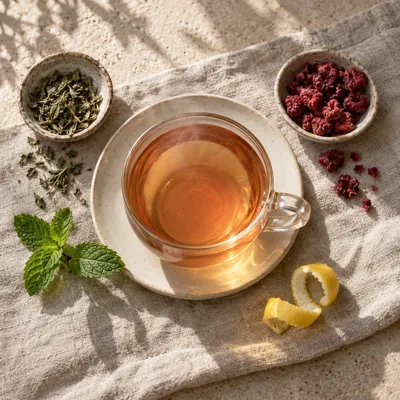
Mint & raspberry
Simple, fresh and gently tart.
View recipeMints are a group of aromatic plants, not one species. They usually have opposite toothed leaves but differ in scent and habit. These recipes use culinary mint; the model label “mint” alone does not establish a particular species.
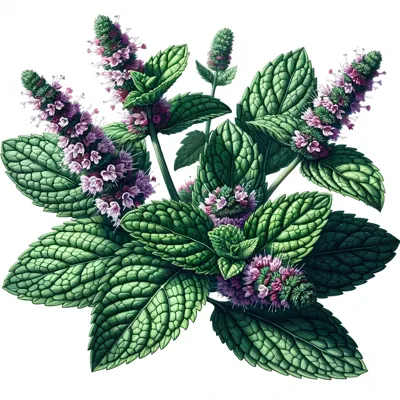
Leaves labelled for culinary use.
Gently break the leaves just before use to release their aroma. Give them space in a blend: strong spices can easily overwhelm them. Follow a linked recipe’s quantities and timing; otherwise follow the labelled food product’s instructions. Strain the infusion before drinking.
Raspberry · Apple · Lemon
These are flavour ideas for recipes, not therapeutic guidance. Start with one addition in a blend to preserve the character of the main ingredient. Dried fruit adds sweetness and a fuller aroma.
Keep the dried product in a labelled, airtight container away from moisture, light and heat. Store fresh ingredients according to their label. Check the date and smell; discard anything mouldy, damp or with an unusual odour. Do not mix a new batch with old leftovers.
Choose only food-grade ingredients of confirmed origin. The name, species and plant part matter. Neither an illustration nor photo identification confirms edibility. For allergies, pregnancy, breastfeeding or medication, consult a professional about herb selection.
All 150 recipes are free on the website, with ingredients, quantities and preparation steps.
Simple, fresh and gently tart.
View recipe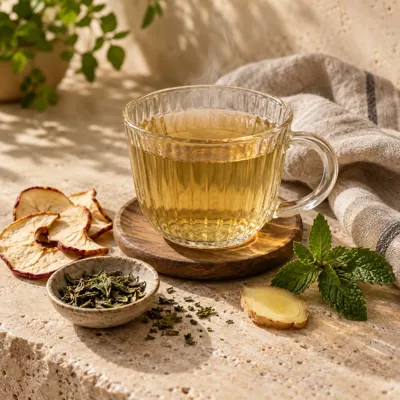
An herbal ritual with dried fruit.
View recipe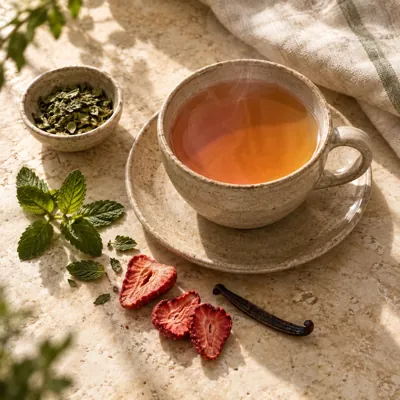
An herbal ritual with dried fruit.
View recipe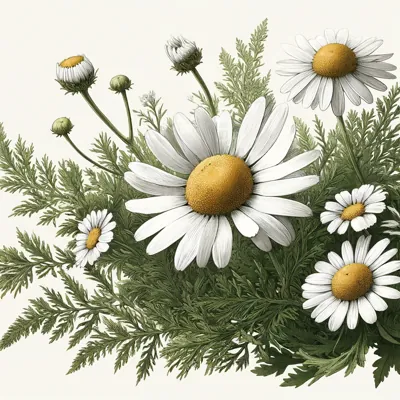
Latin names, appearance, plant parts and culinary uses. Learn what to look for in a plant profile and what a photo cannot confirm.
Read the guideA plant atlas, an infusion library and your personal collection. Discover the app that brings them together.
Discover the Napar app