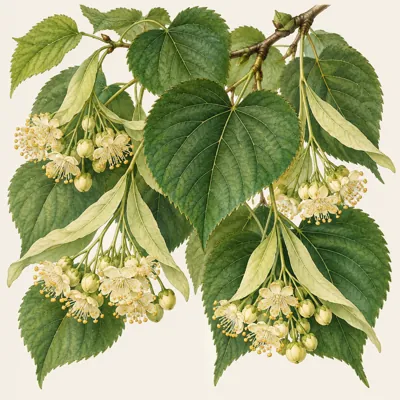
Small-leaved lime
A tree with heart-shaped toothed leaves. Small creamy flowers hang beside a pale elongated bract. Dried linden inflorescences have a subtle floral-honey fragrance; choose a properly dried food-grade product.
Parts used in cooking
Dried food-grade linden inflorescences with bracts.
How to use in cooking
Do not grind delicate dried flowers into powder, as fine fragments are harder to strain. Pair flowers with a mild fruit base to retain their fragrance. Follow the recipe or product label for amounts and preparation. Florist flowers and ornamental plants are not equivalent to food-grade ingredients.
Flavour pairings
Apple · Pear · Raspberry
These are flavour ideas for recipes, not therapeutic guidance. Start with one addition in a blend to preserve the character of the main ingredient. Dried fruit adds sweetness and a fuller aroma.
How to store
Keep the dried product in a labelled, airtight container away from moisture, light and heat. Store fresh ingredients according to their label. Check the date and smell; discard anything mouldy, damp or with an unusual odour. Do not mix a new batch with old leftovers.
Before using a plant
Choose only food-grade ingredients of confirmed origin. The name, species and plant part matter. Neither an illustration nor photo identification confirms edibility. For allergies, pregnancy, breastfeeding or medication, consult a professional about herb selection.
Little discoveries.
Your own ritual.
A plant atlas, an infusion library and your personal collection. Discover the app that brings them together.
Discover the Napar app