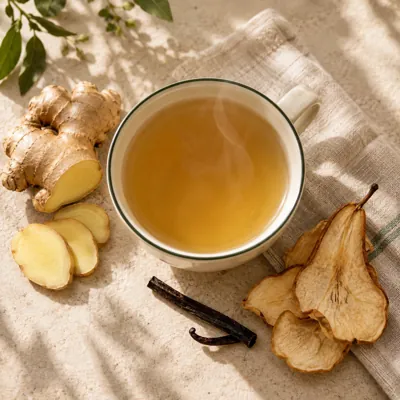
1. Identify the process, not the colour
In EMA terminology, an infusion is prepared by pouring boiling water over plant material and leaving it to steep. A decoction starts with the material in cold water, brings the mixture to the boil and then simmers it for a specified period. The document concerns medicinal products; here it provides terminology, not a recipe for arbitrary herbs.
Look for action words on the package: pour, steep, simmer and strain. The words ‘herbal tea’ do not describe every step. Write down the sequence before laying out your equipment. A mug that can hold freshly boiled water is not automatically a vessel suitable for a stove.
2. Check the exact product and plant part
Leaves, flowers, roots and bark are different materials, even when they come from a plant with the same name. EMA broadly associates delicate parts with infusion and roots or bark with other methods. That is not a rule for deciding how to prepare every packet yourself. The specific product’s directions come first.
Gather the name, plant part, fresh or dried form and preparation instructions in one place. For a purchased blend, read the directions for the whole blend. Do not automatically combine separate methods found for its individual ingredients. Ask the producer about missing instructions instead of choosing the longest time you can find.
3. Separate the method from its settings
The word ‘infusion’ does not specify the amount of material, water volume or steeping time. ‘Decoction’ does not mean simmering for as long as you like. Copy these settings from the label and check when timing begins. Start your timer at the stated step, rather than when you first fill the kettle.
Set out a suitable vessel, a measure, a timer and a way to strain the liquid. For heating, use cookware approved by its manufacturer for your heat source. Place it securely and leave space for a hot filter. Preparing these items first lets you follow the method without searching for equipment halfway through.
4. Do not improvise a boiling step
If the instructions specify steeping, do not replace it with simmering just because the drink looks pale. Colour does not measure whether you followed the method correctly. Before the next preparation, compare your notes with the label: product, amount, water, start of timing and straining point.
A useful note has five fields: product and plant part; method on the package; quantities; timer start; finish. Keep a photo of the instructions with it. The Napar atlas helps organise plant names, while the guides to measuring water and choosing an infuser support your preparation setup. They do not replace the directions for a particular product.
Frequently asked questions
Is a decoction simply an infusion steeped for longer?
No. The distinction also involves heating the plant material together with the water. Leaving it in a mug for longer is not the same as a method that includes simmering.
Can I choose the time from the plant name alone?
No. You need information about the specific product, plant part and preparation method. Do not fill in missing settings with the time printed on a different blend.
Educational and culinary content. It does not confirm the edibility of wild plants or guide medical treatment.
EMA: definitions of infusion and decoction and preparation methods