Check which form you have first
Choose rosemary sold for food use. Fresh shoots and dried leaves both have culinary uses; the RHS describes both forms. When buying dried rosemary, check whether the packet contains leaves alone, a seasoning blend or other additions. A salted roasting seasoning is not a substitute for the herb in a fruit infusion.
A recipe that says “a sprig” still needs a look at its size. A short shoot packed with leaves and a long, almost bare stem do not provide the same amount of foliage. Do not automatically convert either into a teaspoon of dried rosemary. For a first attempt, choose a recipe that specifies the form you have, then follow its water quantity and brewing method.
Separate the leaves from hard wood
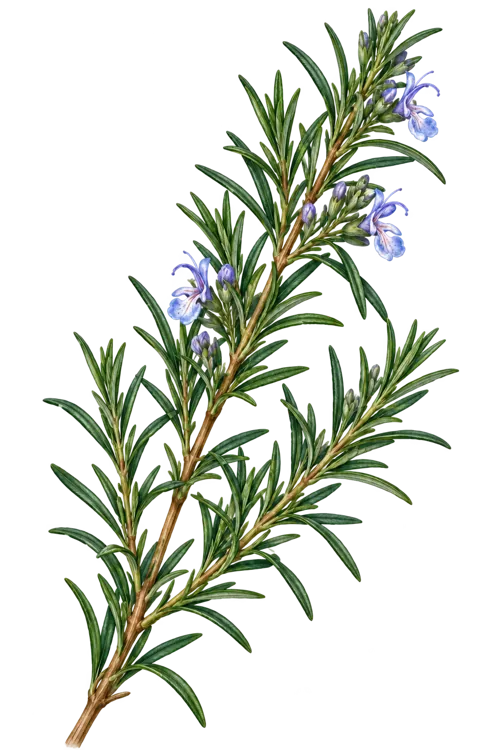
Set out a clean board and a small bowl. Rinse fresh rosemary under running water and pat it dry. Hold the tip and slide your fingers against the direction in which the leaves grow to strip them off; McCormick Science Institute describes this technique. Remove the woody stem and any broken pieces instead of chopping the whole shoot with the leaves.
If your recipe calls for a small whole sprig, position it so that you can lift it out easily after brewing. Do not snap a thick stem into short, sharp pieces just to fit it into an infuser. With a very small basket, stripping the leaves or choosing a larger brewing vessel is more convenient.
Choose a strainer that catches the needles
The narrow leaves can pass through large infuser holes. Before adding water, check both the sides and the gap around the lid. Fine mesh makes it easier to retain fragments; the basket also needs room for the fruit in your recipe. Avoid packing fruit and rosemary so tightly that closing the infuser becomes difficult.
Do not grind dried rosemary into powder solely for making an infusion. If the leaves you have are already finely broken, keep an extra fine strainer ready for pouring. When the recipe’s brewing time is up, remove all the ingredients and check the cup for remaining pieces. A decorative sprig in a photograph does not mean you need to leave one in the finished drink.
Choose the fruit before adding another spice
Rosemary has a pronounced, resinous character. Illinois Extension notes that several strong herbs can compete with one another. For a tasting trial, let rosemary be the main aromatic accent instead of adding mint, cloves and several other assertive ingredients at once. This makes it easier to identify what you would like to change.
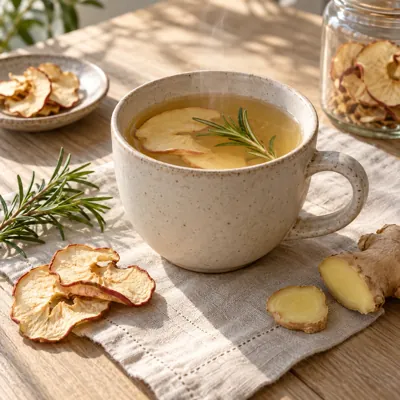
The public Napar catalogue includes “Rosemary · Apple”, with dried apple and ginger, and a rosemary-and-orange recipe. These offer two starting points for choosing a fruit direction. The photograph in this guide comes from the apple recipe. Open the full recipe page for its quantities and method; the appearance of a cup alone cannot tell you how much of each ingredient to use.
Change one thing in the next brew
Note the form of rosemary, the recipe, the water volume and when you strained it. Taste only once the drink has cooled to a comfortable temperature. If the fruit disappears beneath the herbal aroma, use less rosemary in the next trial while keeping the other conditions the same. Adding a sweetener and a new spice at the same time would make comparison harder.
If floating leaves are the problem, change the filter rather than the brewing time. If hard fragments get in the way, separate the stems more carefully. These are two different adjustments: one concerns straining, the other ingredient preparation. Finish your notes by recording whether the cup is comfortable to drink and whether you can still recognise the fruit you chose.
Frequently asked questions
Can dried rosemary replace a fresh sprig?
You can choose a recipe using dried leaves, but a sprig is not a fixed measure. Avoid a one-for-one volume substitution unless the recipe provides guidance.
Should rosemary stay in the cup?
Lift out the sprig or strain the leaves after brewing. This keeps pieces out of the drink and gives the infusion a clear finishing point.
Educational and culinary content. It does not confirm the edibility of wild plants or guide medical treatment.
RHS · Fresh and dried rosemary
McCormick Science Institute · Preparing the leaves