Brewing practice / 6 min read
Particles in an infusion: how to strain leaves and sediment
Check an infuser’s closure, pouring technique and an optional second filter when small particles remain in your cup after brewing.
Read the guideApple trees have oval toothed leaves and white-pink blossom. Variety and drying method affect the fruit’s acidity and sweetness. Thin dried pieces make a mild infusion base; remove the core and do not crush the seeds.
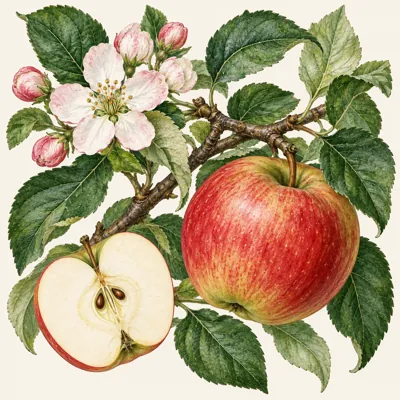
Pieces of flesh with the core and seeds removed.
Cut dried fruit into small pieces to help release flavour. Check the label for added sugar, flavourings and preservatives, especially sulphites if sensitive. Do not replace fruit with the plant’s leaves. Follow a recipe or product instructions and strain the drink; dried fruit does not dissolve completely.
Cinnamon · Mint · Ginger
These are flavour ideas for recipes, not therapeutic guidance. Start with one addition in a blend to preserve the character of the main ingredient. Dried fruit adds sweetness and a fuller aroma.
Keep the dried product in a labelled, airtight container away from moisture, light and heat. Store fresh ingredients according to their label. Check the date and smell; discard anything mouldy, damp or with an unusual odour. Do not mix a new batch with old leftovers.
Choose only food-grade ingredients of confirmed origin. The name, species and plant part matter. Neither an illustration nor photo identification confirms edibility. For allergies, pregnancy, breastfeeding or medication, consult a professional about herb selection.
Check an infuser’s closure, pouring technique and an optional second filter when small particles remain in your cup after brewing.
Read the guide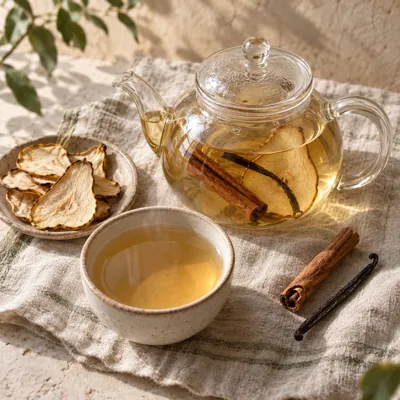
Use a strained infusion to cook porridge: choose a flavour, measure the liquid, follow the right preparation order and finish with simple toppings.
Read the guideA plant atlas, an infusion library and your personal collection. Discover the app that brings them together.
Discover the Napar app